
Bilingual storefront
Product, category, and brand discovery, search, cart, and checkout in Arabic and English.
Kenda Medical E-commerce
A live Arabic and English store for medical and home-healthcare equipment, backed by a dedicated administration application and a modular .NET commerce backend.
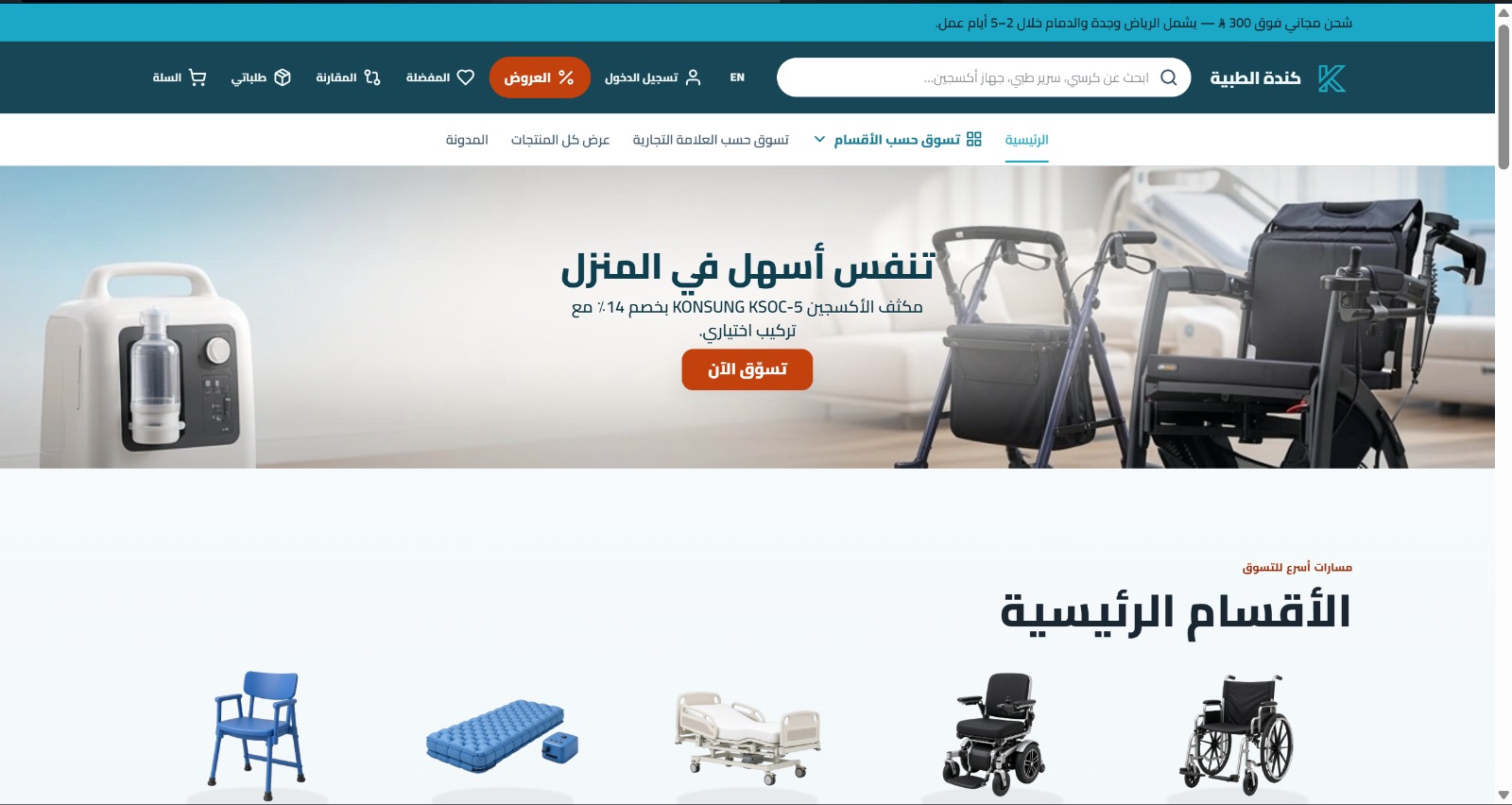
Delivered
Product, category, and brand discovery, search, cart, and checkout in Arabic and English.
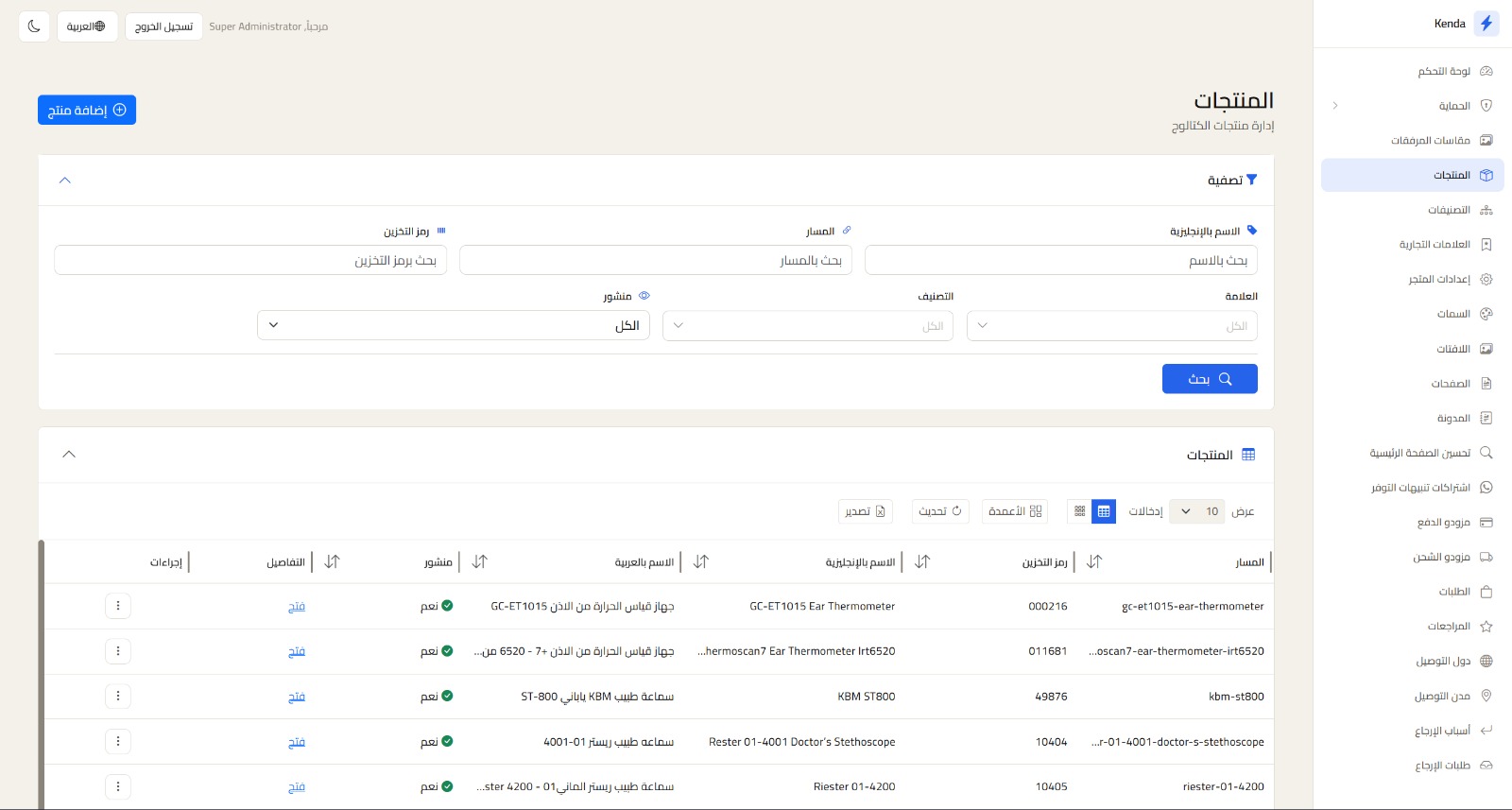
A dedicated application for catalog, content, orders, promotions, delivery locations, and returns.
Commerce APIs and a PostgreSQL data model with separated business modules and permission-based access.
01 / Overview
Kenda Medical needed a store for medical and home-healthcare equipment that customers could browse in Arabic or English, together with tools to operate the catalog and orders.
I implemented the complete system: an Angular 20 SSR storefront, an Angular 22 administration application, and a .NET 10 modular backend using FastEndpoints, EF Core, and PostgreSQL.
02 / The Challenge
A customer sees products, categories, images, prices, search, cart, checkout, and order information.
Behind that experience, the business needs structured product data, content management, order processing, payment handling, shipping integration, notifications, authentication, and administrative workflows.
The engineering challenge: keep bilingual shopping, administration, and backend business rules consistent across separate applications.
03 / Storefront Experience
The storefront focuses on making it easy for customers to move from discovery to purchase.
The experience includes structured category navigation, product browsing, promotional content, reusable product experiences, responsive layouts, product details, image exploration, cart interactions, and checkout flows.
The interface is designed to remain consistent across desktop and mobile while supporting both RTL and LTR experiences.
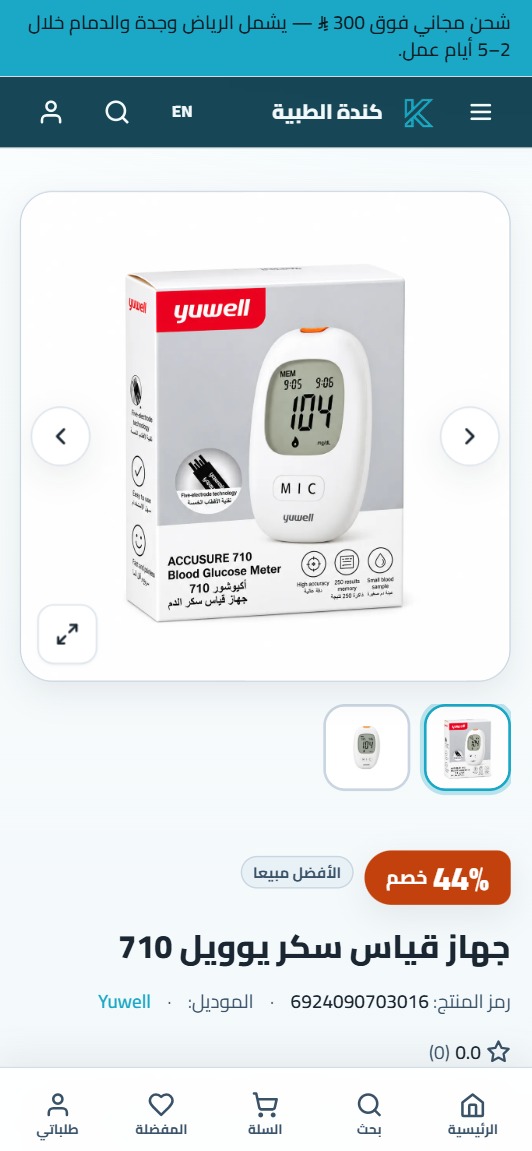
04 / Product Experience
Product pages bring the important purchasing information forward while still allowing customers to explore imagery, variations, related products, and supporting information.
Reusable product components keep the experience consistent across the homepage, categories, search results, recommendations, and related-product sections.
05 / Commerce Experience
Each stage is designed as part of the same workflow rather than as an isolated screen.
06 / Administration
The Angular 22 administration application manages the product catalog, categories, brands, store content, promotions, orders, delivery locations, and returns.
Navigation and access are driven by backend module permissions. Operators can search, filter, and work with structured records through reusable administration components.
07 / Integrations
Dedicated payment and shipping interfaces let provider behavior evolve independently of catalog and order management. The initial adapters support manual operations.
Payment provider registration and configuration are separated from order logic. A manual payment adapter is implemented.
Shipping providers, delivery countries and cities, and checkout shipping quotes form a dedicated delivery workflow. A manual shipping adapter is implemented.
Product-availability subscriptions give operators a way to track interest in products that are currently unavailable.
08 / System Architecture
Customer-facing experiences, administration, business capabilities, integrations, and infrastructure stay separated so each area can evolve without turning the platform into one tightly coupled codebase.
Payments
Delivery
Notifications
Future AI Capabilities
09 / Engineering Decisions
Angular SSR delivers storefront HTML before hydration, while the administration remains a separate Angular application.
Catalog, merchandising, orders, delivery, and returns are registered as distinct commerce capabilities in a .NET modular monolith.
Payment and shipping adapters keep provider-specific behavior outside the core commerce workflow.
EF Core and PostgreSQL model commerce records and their relationships behind typed APIs.
Localized interfaces and direction-aware layouts support the same shopping experience in RTL and LTR.
Backend permissions and module-provided navigation determine the administration capabilities available to a user.
10 / Beyond Commerce
AI is a future extension of this commerce platform, not a feature claimed as delivered in this case study.
The existing structured catalog and commerce APIs could support retrieval, product assistance, and controlled operational tools in a later phase.
The goal isn't to add a chatbot.
It's to make intelligence another capability of the system.